

KEY CLINICAL SUMMARY FOR INTERNATIONAL PATIENTS & EXPATS
- Direct Answer: Unlike calcium oxalate stones, pure uric acid kidney stones are the only urinary calculi that can be completely dissolved non-surgically via Oral Medical Chemolysis, achieving a 70% to 85% dissolution rate within 6 to 12 weeks.
- Diagnostic Signature: Uric acid stones are radiolucent (invisible on standard X-ray KUB) but clearly identified on Low-Dose Non-Contrast CT (NCCT) by a characteristic low attenuation density of 300 – 500 Hounsfield Units (HU) combined with persistently acidic urine (pH ≤ 5.5).
- Mechanism of Dissolution: Titrating urinary pH into the therapeutic window of 6.5 – 7.0 using oral Potassium Citrate (or Sodium Bicarbonate) converts insoluble uric acid crystals into highly soluble urate salts, without risking secondary calcium phosphate encrustation (which occurs if pH exceeds 7.2).
- When Minimally Invasive Laser Surgery Is Required: In cases of ureteral obstruction with moderate-to-severe hydronephrosis, febrile urinary tract infection, or mixed calcium-shell stones unresponsive to alkalinization, Retrograde Intrarenal Surgery (RIRS) with Holmium Laser in Da Nang provides rapid, incision-free stone clearance within 24 hours.
CLINICAL TABLE OF CONTENTS
- Why Uric Acid Stones Are Invisible on X-Ray: CT Hounsfield Unit Diagnosis
- How Oral Chemolysis Works: The pH 6.5–7.0 Therapeutic Window
- Clinical Comparison: Uric Acid vs. Calcium Oxalate vs. Struvite Stones
- Step-by-Step EAU & AUA Protocol for Uric Acid Stone Dissolution in Da Nang
- When Oral Therapy Fails: Holmium Laser RIRS Dusting
- Frequently Asked Questions With Dr. Dang Phuoc Dat
1. Why Uric Acid Stones Are Invisible on X-Ray: CT Hounsfield Unit Diagnosis
According to the European Association of Urology (EAU) Urolithiasis Guidelines, uric acid calculi account for approximately 10% to 15% of all kidney stones globally, with significantly higher prevalence among patients with gout, metabolic syndrome, insulin resistance, high-protein ketogenic diets, or chronic dehydration in tropical climates such as Central Vietnam.
A common diagnostic pitfall for expats and international travelers evaluated at general clinics is relying solely on a plain abdominal X-ray (KUB). Because pure uric acid crystals lack calcium atoms, X-rays pass directly through them—rendering the stone radiolucent (invisible on X-ray). In clinical practice in Da Nang, Dr. Dang Phuoc Dat, MD, Specialist Level I utilizes a three-pillar diagnostic protocol to confirm whether a stone is eligible for oral dissolution therapy:
- Low-Dose Non-Contrast Helical CT (NCCT): Provides 99% sensitivity and measures the exact radiological density of the calculus in Hounsfield Units (HU). Pure uric acid stones consistently measure between 300 and 500 HU, whereas dense calcium oxalate monohydrate stones typically exceed 1,000 to 1,400 HU.
- Urinary pH Profiling: Persistent unduly acidic urine (spot and 24-hour urine pH ≤ 5.5) is the primary metabolic driver of uric acid precipitation, often accompanied by uric acid crystalluria on microscopy.
- Serum Metabolic Panel: Evaluates serum uric acid, creatinine/eGFR, electrolytes (Na+, K+, Cl-), and HbA1c to screen for gout or renal tubular ammoniagenesis defects.
2. How Oral Chemolysis Works: The pH 6.5–7.0 Therapeutic Window
As detailed in StatPearls – Uric Acid Nephrolithiasis (NCBI), the dissociation constant (pKa) of uric acid in human urine is 5.35. At a urinary pH below 5.5, the majority of urinary uric acid exists in its undissociated, poorly soluble free acid form (solubility limit ~90 mg/L), causing rapid crystal aggregation.
When oral alkalinizing agents raise the urinary pH to 6.5 – 7.0, undissociated uric acid is chemically converted into monopotassium or monosodium urate, which is more than 12 to 20 times more soluble in urine (>1,500 mg/L). As alkalinized urine continuously bathes the renal pelvis or ureter, the stone steadily dissolves layer by layer.
Clinical Pearl from Dr. Dang Phuoc Dat, MD, Specialist Level I
“Before scheduling surgery for a non-obstructing 8 mm to 14 mm renal stone, checking the CT Hounsfield Unit density is critical. If the stone attenuation is 380 HU and the patient's urine pH is 5.0, a supervised 8-week course of Potassium Citrate can completely dissolve the stone without anesthesia or ureteroscopy.”
3. Clinical Comparison: Uric Acid vs. Calcium Oxalate vs. Struvite Stones
| Clinical Parameter | Pure Uric Acid Stone | Calcium Oxalate Stone | Struvite (Infection) Stone |
|---|---|---|---|
| Plain X-Ray (KUB) Visibility | Radiolucent (Invisible) | Strongly Radiopaque | Moderately Radiopaque (Staghorn) |
| Non-Contrast CT Density (HU) | 300 – 500 HU | 900 – 1,500 HU | 550 – 850 HU |
| Baseline Urine pH | Acidic (pH ≤ 5.5) | Variable (pH 5.5 – 6.5) | Alkaline (pH > 7.2, urease bacteria) |
| Oral Dissolution Feasibility | YES (70%–85% complete resolution) | NO (Cannot be dissolved once formed) | NO (Requires complete surgical removal) |
| First-Line Management | Potassium Citrate + Xanthine Oxidase Inhibitor; RIRS if obstructed | Flexible Ureteroscopy (RIRS) or Mini-PCNL | Mini-PCNL + Culture-Specific Antibiotics |
4. Step-by-Step EAU & AUA Protocol for Uric Acid Stone Dissolution in Da Nang
Following the American Urological Association (AUA) Medical Management of Kidney Stones Guideline, oral chemolysis is prescribed through a structured protocol:
- First-Line Alkalinizing Agent (Potassium Citrate): Prescribed at 30 to 60 mEq/day in divided doses after meals. Potassium is strongly preferred over sodium salts because excess sodium increases urinary calcium excretion and promotes monosodium urate-induced calcium crystallization.
- Alternative Agent (Sodium Bicarbonate): Used at 1,000 mg three times daily only in patients with chronic kidney disease (impaired eGFR) or baseline hyperkalemia where potassium supplementation is contraindicated.
- Home Dipstick pH Titration (6.5 – 7.0): Patients test their urine pH morning, afternoon, and evening using calibrated pH indicator strips (increment 0.2–0.3 units) and adjust dosing to keep pH strictly between 6.5 and 7.0 (up to 7.2 maximum for active stone dissolution).
- Urate-Lowering Therapy: Co-administration of Allopurinol (100–300 mg/day) or Febuxostat (40–80 mg/day) when hyperuricemia or hyperuricosuria (>800 mg/24h) is present, alongside fluid intake targeting >2.5 Liters of urine output daily.
SAFETY WARNING: Avoid Over-Alkalinization Above pH 7.2!
Raising urinary pH above 7.2 does not speed up uric acid dissolution; instead, it triggers rapid supersaturation and precipitation of Calcium Phosphate (Apatite/Brushite). This forms an insoluble calcified shell around the uric acid core, rendering oral medication ineffective and requiring laser lithotripsy.
5. When Oral Therapy Fails: Holmium Laser RIRS Dusting
Oral chemolysis requires alkalinized urine to flow freely around the stone. Immediate minimally invasive endourological intervention is indicated when:
- Obstructive Ureteral Impaction: A stone lodged in the ureter blocks urinary flow (preventing alkalinized urine from reaching the calculus) and causes Grade 2–3 hydronephrosis or intractable renal colic.
- Obstructive Pyelonephritis / Urosepsis Risk: Fever, chills, leukocytosis, or bacteriuria accompanying an obstructing stone requires emergency Double-J ureteral stent decompression followed by definitive laser lithotripsy.
- Mixed Calcium-Uric Acid Composition: Failure to achieve at least 30%–50% stone volume reduction on follow-up imaging at 4 to 6 weeks.
At Family Hospital Da Nang, Dr. Dang Phuoc Dat performs Retrograde Intrarenal Surgery (RIRS) using a high-definition digital flexible ureteroscope and Holmium:YAG Laser. Because uric acid stones have a low density (300–500 HU), high-frequency, low-pulse-energy laser settings vaporize the stone into sub-millimeter dust within 20 minutes via the natural urinary tract—with zero skin incisions and next-day hospital discharge.
6. Frequently Asked Questions With Dr. Dang Phuoc Dat
Can Shockwave Lithotripsy (ESWL) treat uric acid kidney stones?
Standard Extracorporeal Shockwave Lithotripsy (ESWL) is generally ineffective for pure uric acid stones because they are radiolucent and cannot be targeted under standard X-ray fluoroscopy unless ultrasound-guided localization is available. Oral chemolysis or flexible ureteroscopy (RIRS) is much more effective.
Can an obstructing uric acid stone be dissolved after placing a Double-J stent?
Yes! If a patient presents with acute ureteral obstruction or hydronephrosis from a large radiolucent uric acid stone, placing a temporary Double-J ureteral stent restores urinary drainage around the stone, allowing oral Potassium Citrate chemolysis to dissolve the stone over 4 to 6 weeks, or preparing the ureter for effortless RIRS laser dusting.
Is direct billing for international health insurance available in Da Nang?
Yes. At Family Hospital Da Nang (Room 326, 73 Nguyen Huu Tho Street), Dr. Dang Phuoc Dat provides full English-language medical documentation, itemized ICD-10 diagnostic reports, low-dose CT imaging, and direct billing support with major international insurance providers.
MEDICAL REFERENCES (VANCOUVER STYLE)
- Skolarikos A, Jung H, Neisius A, et al. EAU Guidelines on Urolithiasis: Oral Chemolysis of Uric Acid Calculi. Arnhem: European Association of Urology; 2026. (EAU Guidelines)
- Pearle MS, Goldfarb DS, Assimos DG, et al. Medical Management of Kidney Stones: AUA Guideline. Journal of Urology. (AUA Guidelines)
- Kaur P, Bhatt H. Hyperuricosuria and Uric Acid Nephrolithiasis. In: StatPearls [Internet]. Treasure Island (FL): StatPearls Publishing; 2025. (NCBI Bookshelf)
- Ministry of Health of Vietnam. Decision No. 4068/QD-BYT on Clinical Guidelines for Diagnosis and Treatment of Nephrology and Urology Diseases. Hanoi; 2016. (Vietnam Ministry of Health)
INTERNATIONAL UROLOGY & KIDNEY STONE CENTER IN DA NANG
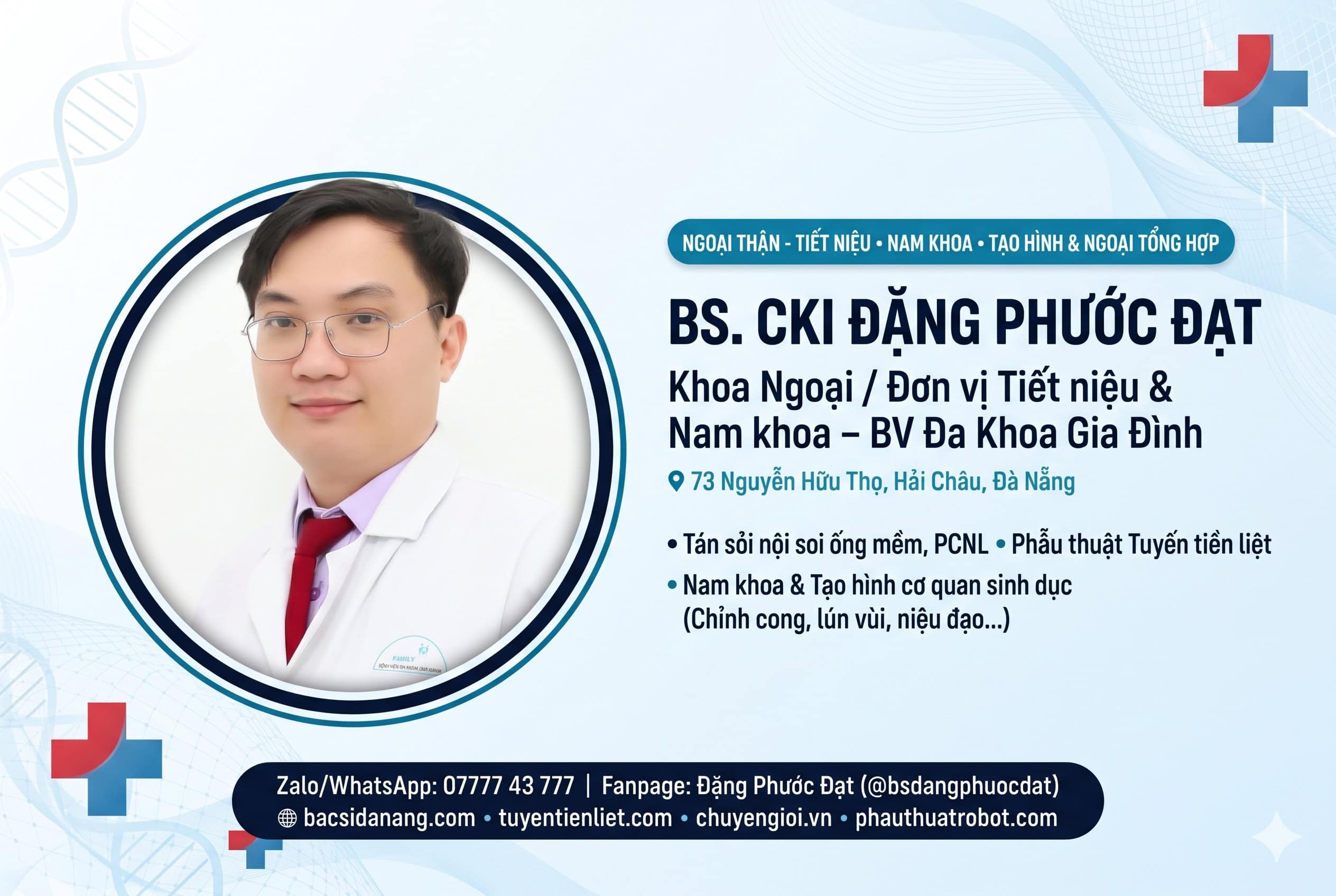
Attending Specialist: Dr. Dang Phuoc Dat, MD, Specialist Level I – Consultant Urologist, Andrologist & Endourological Surgeon
- Location 1 (Private Clinic): 162 Te Hanh Street, Hoa Xuan, Cam Le District, Da Nang
- Location 2 (Hospital Practice): Family Hospital – 73 Nguyen Huu Tho Street, Clinic Room 326, Da Nang (Monday – Saturday, 07:00 – 17:00)
- Direct English Hotline / Zalo / WhatsApp: 07777 43 777
- Official Websites: bacsidanang.com | tuyentienliet.com
Medical Disclaimer: This clinical guide provides evidence-based medical information and does not replace an in-person urological evaluation, CT imaging, and laboratory electrolyte monitoring prior to initiating urinary alkalinization therapy.
Select any symptoms you are currently experiencing to see your recommended clinical triage level before messaging Dr. Dang Phuoc Dat:




, oral medical chemolysis using Potassium Citrate to maintain urinary pH between 6.5 and 7.0 can completely dissolve 70% to 85% of pure stones. Explore evidence-based uric acid kidney stone dissolution therapy and Holmium laser RIRS in Da Nang with Dr. Dang Phuoc Dat, MD, Specialist Level I.)