

 & Mini-PCNL at Family Hospital: +84919480180.)
Author & Medical Reviewer: Dr. Dang Phuoc Dat (Specialist Level I) – Urology, Andrology & Reconstructive Surgery, Family Hospital Da Nang | Updated: October 22, 2026
High-power Holmium:YAG laser lithotripsy has revolutionized modern endourology, replacing painful open flank incisions with scarless or keyhole procedures that clear complex renal calculi in a single session. When researching kidney stone laser surgery Da Nang, patients benefit most from understanding how stone size, location, and Hounsfield Unit (HU) hardness determine whether natural-orifice flexible ureteroscopy (RIRS) or keyhole percutaneous surgery (Mini-PCNL) is the optimal choice.
Quick Clinical Summary: Kidney stone laser surgery uses a flexible optical fiber delivering Holmium:YAG laser energy directly to the stone surface to vaporize it into fine sub-millimeter dust (Dusting) without injuring renal parenchyma. In Da Nang, Dr. Dang Phuoc Dat performs two gold-standard laser techniques: Retrograde Intrarenal Surgery (RIRS) via the natural urinary tract with zero skin incisions for stones $\le 20\text{ mm}$, and Ultrasound-Guided Mini-PCNL via a $5\text{ mm}$ flank tract for large stones $> 20\text{ mm}$ or staghorn calculi.

1. How Holm>1. How Holmium:YAG Laser Lithotripsy Works: Dusting vs. Fragmentation
="wp-block-paragraph">Unlike external shockwaves or older pneumatic lithotripters that merely crack stones into large chunks, the Holmium:YAG laser operates at a $2100\text{ nm}$ wavelength that is strongly absorbed by water within $0.5\text{ mm}$ of the fiber tip, creating a precise photothermal and photoacoustic micro-explosion.By adjusting pulse energy (Joules) and frequency (Hz), the surgeon tailors the laser effect to the stone’s composition:
- Dusting & Popcorning Mode (High frequency, low pulse energy): Ablates the calculus into microscopic powder ($< 1\text{ mm}$) that washes out naturally with urine without causing ureteral colic.
- Fragmentation Mode (Low frequency, high pulse energy): Breaks down ultra-hard calculi (such as Calcium Oxalate Monohydrate stones with density $> 1200\text{ HU}$ on CT) into extractable fragments retrieved with a Nitinol basket or suction sheath.
Clinical Co>Clinical Comparison: Flexible Ureteroscopy (RIRS) vs. Mini-PCNL Laser Surgery
class="wp-block-table">| Clinical Parameter | Flexible Ureteroscopy Laser Lithotripsy (RIRS) | Keyhole Percutaneous Laser Surgery (Mini-PCNL) |
|---|---|---|
| Surgical Access Route | 100% through the natural urinary channel (Urethra -> Bladder -> Ureter -> Kidney); zero skin incisions | Single $5\text{ mm}$ keyhole tract (16Fr–18Fr) through the flank directly into the renal calyx |
| Ideal Stone Size & Location | Renal stones $\le 20\text{ mm}$, proximal ureteral stones, or multiple calyceal stones | Large renal stones $> 20\text{ mm}$, complex partial/complete staghorn stones, or impacted lower-pole stones |
| Single-Session Stone-Free Rate | 85% – 92% | 90% – 96% even for high stone burden |
| Hospital Stay & Recovery | 24 – 48 hours; minimal postoperative discomfort, rapid return to travel/work | 3 – 4 days; tiny 5 mm skin puncture heals rapidly |
2. Step-by-Step Laser Stone Surgery Protocol wi>2. Step-by-Step Laser Stone Surgery Protocol with Dr. Dang Phuoc Dat
tps://familyhospital.vn/profile/dang-phuoc-dat/">Family Hospital Da Nang, Dr. Dang Phuoc Dat executes both RIRS and Ultrasound-Guided Mini-PCNL with Laser Lithotripsy under strict European Association of Urology (EAU) safety protocols:- Preoperative CT Mapping & Sterile Urine Verification: Multi-slice CT Urography maps the infundibulopelvic angle and stone density (HU), while preoperative urine culture ensures sterile urine prior to intrarenal instrumentation.
- Endoscopic Laser Ablation:
- For RIRS: Placement of a hydrophilic Ureteral Access Sheath (UAS) maintains low intrarenal pelvic pressure while a digital flexible ureteroscope ($270^\circ$ deflection) navigates into every renal calyx to dust the stone with a $200\text{ }\mu\text{m}$ laser fiber.
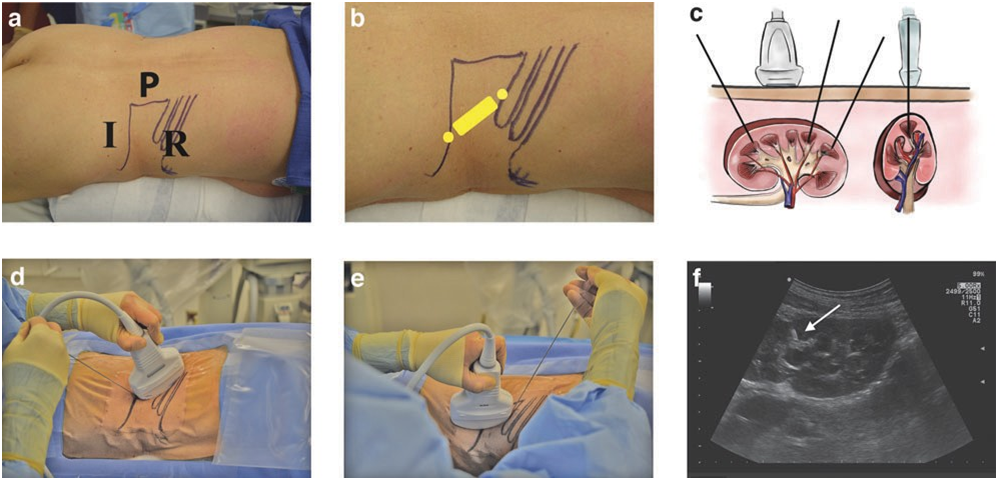
- For Mini-PCNL: Real-time Doppler ultrasound guides needle puncture precisely through the avascular renal papilla, followed by single-step tract dilation (16Fr–18Fr), high-power Holmium laser fragmentation, and immediate hydrodynamic vacuum extraction of fragments.
- Protective Double-J Stent Placement: A soft internal Double-J Ureteral Stent is placed to ensure unobstructed renal drainage and is removed painlessly after 2–4 weeks.
3. Factors Influencing Kidney Stone Laser Surgery C>3. Factors Influencing Kidney Stone Laser Surgery Cost in Da Nang
laser lithotripsy in Da Nang is a fraction of Western or Singaporean hospital fees while utilizing identical international-grade consumables:- Specialized Endourological Consumables: RIRS utilizes single-use hydrophilic guidewires, a Ureteral Access Sheath (UAS), Nitinol stone baskets, and micro-flexible laser fibers.
- Pre-Stenting (Passive Ureteral Dilation): In approximately 15–20% of patients with a congenitally narrow ureteral lumen, placing a Double-J stent 7–10 days before RIRS safely dilates the ureter to prevent mucosal injury.
- Insurance Coverage: Covered by Vietnamese National Health Insurance (BHYT) and international medical insurance direct-billing networks at Family Hospital Da Nang.
Clinical Red Flags: When to Seek Immediate Urological C>Clinical Red Flags: When to Seek Immediate Urological Care
kground-color:#fff5f5;border-left-color:#d32f2f;border-left-width:4px;padding-top:16px;padding-right:20px;padding-bottom:16px;padding-left:20px">URGENT MEDICAL RED FLAGS:
- While an internal Double-J stent is in place after discharge, mild flank discomfort during urination or pink-tinged urine after walking is normal. However, high fever (> 38.5°C), worsening severe flank pain, or thick blood clots require immediate medical review.
- Never forget your scheduled Double-J stent removal date (leaving a stent indwelling beyond 3–6 months causes severe stent encrustation and secondary stone formation).