Trang chủ Urology & Kidney Stone Surgery Mini PCNL Kidney Stone Surgery Da Nang – Dr. Dang Phuoc Dat

Mini PCNL Kidney Stone Surgery Da Nang – Dr. Dang Phuoc Dat

Ultrasound-guided Mini-PCNL kidney stone surgery in Da Nang performed by Dr. Dang Phuoc Dat
Ultrasound-guided Mini-PCNL clears large >2 cm and staghorn kidney stones through a single 5 mm keyhole tract with zero X-ray radiation exposure.
Bạn đang cần bác sĩ Tiết niệu - Nam khoa tư vấn qua điện thoại: Đăng kí tại đây
Đánh giá nội dung:

Author & Medical Reviewer: Dr. Dang Phuoc Dat (Specialist Level I) – Urology, Andrology & Reconstructive Surgery, Family Hospital Da Nang | Updated: October 22, 2026

For large renal pelvic stones exceeding $20\text{ mm}$ or complex staghorn calculi branching across multiple calyces, patients once faced invasive open flank surgery with a 15–20 cm muscle-splitting incision. Today, mini PCNL kidney stone surgery Da Nang (Mini-Percutaneous Nephrolithotomy) serves as the international gold standard, achieving complete stone clearance through a single $5\text{ mm}$ keyhole puncture.

Quick Clinical Summary: Mini-PCNL creates a miniature $5\text{ mm}$ (16Fr–18Fr) percutaneous tunnel from the flank directly into the target renal calyx under real-time ultrasound guidance, utilizing high-power Holmium laser energy and hydrodynamic suction to clear large stones in a single session. Following EAU and AUA guidelines, Dr. Dang Phuoc Dat performs Ultrasound-Guided Mini-PCNL in Da Nang as first-line therapy for all renal stones $> 20\text{ mm}$, staghorn calculi, and complex lower-pole stones $> 15\text{ mm}$.

Ultrasound-guided Mini-PCNL kidney stone surgery in Da Nang performed by Dr. Dang Phuoc Dat
Ultrasound-guided Mini-PCNL clears large >2 cm and staghorn kidney stones through a single 5 mm keyhole tract with zero X-ray radiation exposure.

1. What Is Mini-P>1. What Is Mini-PCNL and How Does It Improve Upon Standard PCNL?

lock-paragraph">Conventional Standard PCNL requires a wide 24Fr–30Fr ($8–10\text{ mm}$) access sheath, which carries a higher risk of parenchymal bleeding. The evolution to Mini-PCNL downsizes the metallic working sheath to 16Fr–18Fr (approximately $5\text{ mm}$), delivering major clinical advantages:

  • Maximal Nephron & Vascular Preservation: Cross-sectional parenchymal trauma is reduced by more than 50%, entering precisely along the longitudinal axis of the renal papilla through Brodel’s Bloodless Line.
  • Hydrodynamic ‘Vacuum Cleaner Effect’: Based on the Bernoulli principle, continuous irrigation between the slender nephroscope and the 16Fr–18Fr sheath generates a low-pressure vortex that automatically flushes crushed stone fragments out through the sheath without repeated grasping forceps passes.

Clinical Comparison: Ultr>Clinical Comparison: Ultrasound-Guided Mini-PCNL vs. Open Kidney Stone Surgery

k-table">
Clinical CriterionMini-PCNL Keyhole Surgery (16Fr–18Fr)Traditional Open Nephrolithotomy
Incision SizeSingle $5\text{ mm}$ skin puncture in the flank (pen-tip size)15 – 20 cm flank incision cutting through multiple abdominal/back muscle layers
Renal Parenchymal ImpactMinimal (< 1% of renal cortical surface), preserving eGFRRequires extended pyelotomy or nephrotomy, risking cortical scarring
Stone-Free Rate (SFR)90% – 96% via direct nephroscopic inspection of individual calycesProne to residual fragments in hidden anterior/posterior calyces
Postoperative Pain & StayMild discomfort, ambulation within 24 hours, discharge in 3 – 4 daysSignificant wound pain, 7 – 10 day hospitalization, risk of incisional hernia
Clinical Comparison: Ultrasound-Guided Mini-PCNL vs. Open Kidney Stone Surgery
INTERNATIONAL CLINICAL CARE PATHWAY • BACSIDANANG.COM MINI PCNL KIDNEY STONE SURGERY DA NANG 1. PRECISION DIAGNOSTICS • Specialist 1-on-1 Evaluation • High-Res CT / Doppler Imaging • EAU / AUA Risk Stratification Mini-Percutaneous Nephrolithotomy 2. PERSONALIZED THERAPY • Minimally Invasive Priority • Organ & Nerve Preservation • Strict Sterile OR Standards Staghorn Renal Calculi 3. RECOVERY & INSURANCE • Rapid Return to Travel/Work • Direct Insurance Billing • Long-Term Recurrence Prevention Brodel’s Bloodless Line (Avascular Medical Reviewer: Dr. Dang Phuoc Dat (Specialist Level I) • Family Hospital Da Nang • WhatsApp/Zalo: +84 919 480 180
Clinical diagnosis and treatment pathway for “mini PCNL kidney stone surgery Da Nang” – Dr. Dang Phuoc Dat, Family Hospital Da Nang.

2. Clinical Indications for Mini-PCNL in Da Nang

2. Clinical Indications for Mini-PCNL in Da NangDr. Dang Phuoc Dat stratifies stone complexity using the Guy’s Stone Score on preoperative CT Urography and recommends Mini-PCNL for:

  1. Large Renal Calculi $> 20\text{ mm}$ or partial/complete Staghorn Calculi occupying the renal pelvis and calyces.
  2. Lower-Pole Renal Stones $15–20\text{ mm}$ with unfavorable anatomy (narrow infundibulum $< 5\text{ mm}$ or acute infundibulopelvic angle $< 30^\circ$) where ESWL or flexible ureteroscopy cannot clear fragments.
  3. Large Impacted Proximal Ureteral Stones ($> 15\text{ mm}$) associated with Grade II–III hydronephrosis.
  4. Recurrent Stones in Previously Operated Kidneys or calculi refractory to ESWL/RIRS.
mini PCNL kidney stone surgery Da Nang - Dr. Dang Phuoc Dat
Ultrasound-Guided Mini-PCNL with Holmium Laser Lithotripsy performed by Dr. Dang Phuoc Dat in Da Nang.

3. Radiation-Free Ultrasound-Guided Puncture Technique by Dr. Dan>3. Radiation-Free Ultrasound-Guided Puncture Technique by Dr. Dang Phuoc Dat

Phuoc Dat’s Mini-PCNL technique in Da Nang is 100% Real-Time Ultrasound-Guided Renal Access, eliminating ionizing X-ray fluoroscopy exposure for both patient and surgical team:

  • Step 1 (Retrograde Ureteral Catheterization): Under general anesthesia, a ureteral catheter is placed cystoscopically to instil sterile saline, gently distending the collecting system (artificial hydronephrosis) for pinpoint targeting.
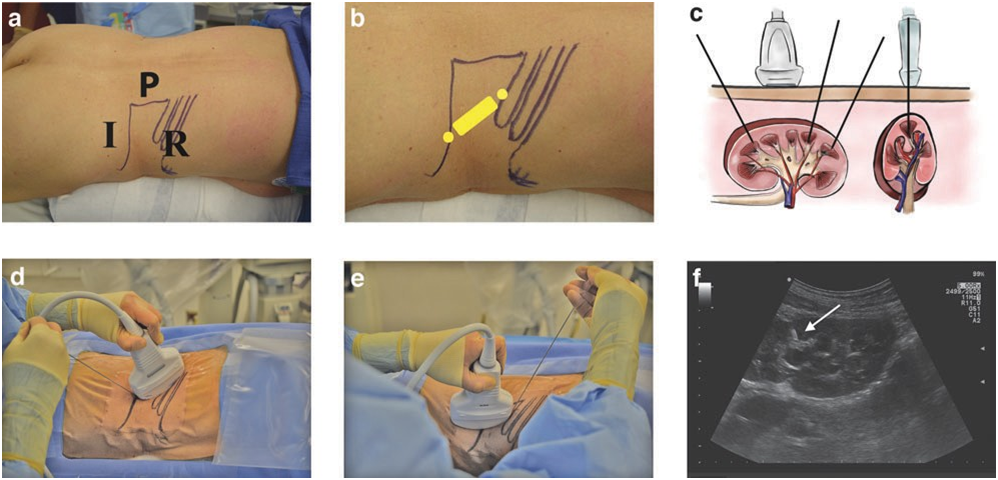
  • Step 2 (Doppler Ultrasound Papillary Puncture & 5 mm Dilation): Color Doppler ultrasound visualizes intrarenal segmental arteries and adjacent organs (pleura, colon, spleen/liver), guiding the puncture needle directly through the target calyx fornix before dilating to 16Fr–18Fr.
  • Step 3 (High-Power Holmium Laser Lithotripsy & Vacuum Evacuation): The miniature nephroscope fragments the stone burden with a 550 $\mu$m Holmium laser fiber while continuous hydrodynamic flow evacuates every fragment.
  • Step 4 (Double-J Stenting & Tubeless Option): An internal Double-J Ureteral Stent is deployed anterogradely, with selected uncomplicated cases completed as Tubeless Mini-PCNL (no external nephrostomy bag).

Clinical Red Flags: When to Seek Immediate Urological Care

<>Clinical Red Flags: When to Seek Immediate Urological Carer:#fff5f5;border-left-color:#d32f2f;border-left-width:4px;padding-top:16px;padding-right:20px;padding-bottom:16px;padding-left:20px">

URGENT MEDICAL RED FLAGS:

- Nhà tài trợ nội dung -
  • During the first 7–14 days after discharge following Mini-PCNL, patients must avoid heavy lifting, strenuous exercise, or vigorous running to allow complete healing of the parenchymal tract.
  • Seek urgent urological evaluation if you develop bright red hematuria with blood clots, flank swelling, or high fever with chills.

Clinical Perspective from Da Nang: Patients with large 3–4 cm staghorn stones frequently delay surgery because the stone sitsfixed inside the renal pelvis without causing acute colic pain. In urology, staghorn calculi are ‘silent kidney destroyers’—harboring urea-splitting bacteria (Proteus, Klebsiella) that progressively destroy renal cortex and lead to xanthogranulomatous pyelonephritis or complete loss of kidney function.

Frequently Asked Questions (International Patient Guide)

Frequently Asked Questions (International Patient Guide)

the hospital after Mini-PCNL surgery in Da Nang?

Most patients stay in the hospital for 3 to 4 days following Mini-PCNL. The urethral catheter is typically removed within 24–48 hours, and patients walk comfortably in their room the day after surgery.

Question 2: Can Mini-PCNL be performed on a kidney that had open stone surg>Question 2: Can Mini-PCNL be performed on a kidney that had open stone surgery in the past?

retroperitoneal scar tissue around the kidney, real-time Doppler ultrasound guidance allows Dr. Dang Phuoc Dat to establish a precise 5 mm tract directly into the stone-bearing calyx without reopening the old scar.

Question 3: When is the internal Double-J stent removed after Mini-PCNL?Question 3: When is the internal Double-J stent removed after Mini-PCNL?

moved 2 to 4 weeks postoperatively via a 3-minute outpatient flexible cystoscopy once ureteral edema has resolved.

Clinical References & International Guidelines

    Clinical References & International GuidelinesAU): EAU Guidelines on Urolithiasis, Management of Non-Neurogenic Male LUTS, Sexual and Reproductive Health, and Prostate Cancer (2025–2026 Edition).
  1. American Urological Association (AUA): AUA Clinical Practice Guidelines on Kidney Stones, Benign Prostatic Hyperplasia (BPH), Erectile Dysfunction, and Peyronie’s Disease.
  2. Ministry of Health of Vietnam: National Clinical Guidelines on Diagnosis and Treatment in Urology and Andrology.
  3. International Society for Sexual Medicine (ISSM) & WPATH: Standards of Care for the Health of Transgender and Gender Diverse People, Version 8 (SOC-8).

Medical Disclaimer: This clinical guide is authored and medically reviewed by Dr. Dang Phuoc Dat (Specialist Level I in Urology & Andrology) based on current international urological guidelines for patient education. It does not substitute for an in-person clinical examination, diagnostic imaging, or individualized surgical consultation.

International Patient Consultation & Booking in Da Nang, Vietnam

<>International Patient Consultation & Booking in Da Nang, Vietnamef="https://bacsidanang.com/urologist-in-da-nang/">Dr. Dang Phuoc Dat (Bs CKI Đặng Phước Đạt) – Specialist Level I in Urology, Andrology & Reconstructive Plastic Surgery
  • Hospital Practice: Department of Surgery – Family Hospital Da Nang (73 Nguyen Huu Tho Street, Hai Chau District, Da Nang City, Vietnam)
  • Direct WhatsApp / Zalo / Hotline (English & Vietnamese): +84 919 480 180
  • Email: bsdangphuocdat@gmail.com
  • Medical Portals: bacsidanang.com | tuyentienliet.com | chuyengioi.vn | phauthuatrobot.com
  • { “@context”: “https://schema.org”, “@graph”: [ { “@type”: “MedicalWebPage”, “@id”: “https://bacsidanang.com/mini-pcnl-kidney-stone-surgery-da-nang/#webpage”, “url”: “https://bacsidanang.com/mini-pcnl-kidney-stone-surgery-da-nang/”, “name”: “Mini PCNL Kidney Stone Surgery Da Nang – Dr. Dang Phuoc Dat”, “description”: “Ultrasound-guided Mini PCNL kidney stone surgery in Da Nang clears large (>2cm) & staghorn stones via a 5mm keyhole. Consult Dr. Dang Phuoc Dat: +84919480180.”, “inLanguage”: “en-US”, “datePublished”: “2026-10-22”, “dateModified”: “2026-10-22”, “lastReviewed”: “2026-10-22”, “primaryImageOfPage”: { “@type”: “ImageObject”, “url”: “https://bacsidanang.com/wp-content/uploads/2026/10/PCNL-in-Da-Nang-1.png”, “caption”: “Ultrasound-guided Mini-PCNL clears large >2 cm and staghorn kidney stones through a single 5 mm keyhole tract with zero X-ray radiation exposure.” }, “medicalAudience”: { “@type”: “MedicalAudience”, “audienceType”: “Patient” }, “author”: { “@type”: “Physician”, “name”: “Dr. Dang Phuoc Dat (Bs CKI Dang Phuoc Dat)”, “jobTitle”: “Specialist Level I in Urology, Andrology & Reconstructive Surgery”, “url”: “https://bacsidanang.com/urologist-in-da-nang/”, “sameAs”: [ “https://familyhospital.vn/profile/dang-phuoc-dat/”, “https://bacsidanang.com/bac-si-than-tiet-nieu-da-nang/”, “https://bacsidanang.com/ultrasound-guided-mini-pcnl-with-laser-lithotripsy-minimally-invasive-kidney-stone-treatment-in-da-nang/”, “https://chuyengioi.vn/author/chuyengioi/”, “https://www.slideshare.net/PhuocDatYC” ], “worksFor”: { “@type”: “Hospital”, “name”: “Family Hospital Da Nang (Bệnh viện Đa khoa Gia Đình Đà Nẵng)”, “address”: { “@type”: “PostalAddress”, “streetAddress”: “73 Nguyen Huu Tho Street, Hai Chau District”, “addressLocality”: “Da Nang”, “addressCountry”: “VN” }, “telephone”: “+84919480180” } }, “reviewedBy”: { “@type”: “Physician”, “name”: “Dr. Dang Phuoc Dat”, “url”: “https://familyhospital.vn/profile/dang-phuoc-dat/” } }, { “@type”: “FAQPage”, “@id”: “https://bacsidanang.com/mini-pcnl-kidney-stone-surgery-da-nang/#faq”, “mainEntity”: [ { “@type”: “Question”, “name”: “How many days will I stay in the hospital after Mini-PCNL surgery in Da Nang?”, “acceptedAnswer”: { “@type”: “Answer”, “text”: “Most patients stay in the hospital for 3 to 4 days following Mini-PCNL. The urethral catheter is typically removed within 24–48 hours, and patients walk comfortably in their room the day after surgery.” } }, { “@type”: “Question”, “name”: “Can Mini-PCNL be performed on a kidney that had open stone surgery in the past?”, “acceptedAnswer”: { “@type”: “Answer”, “text”: “Yes. Even when prior open surgery has left retroperitoneal scar tissue around the kidney, real-time Doppler ultrasound guidance allows Dr. Dang Phuoc Dat to establish a precise 5 mm tract directly into the stone-bearing calyx without reopening the old scar.” } }, { “@type”: “Question”, “name”: “When is the internal Double-J stent removed after Mini-PCNL?”, “acceptedAnswer”: { “@type”: “Answer”, “text”: “The internal Double-J stent is generally removed 2 to 4 weeks postoperatively via a 3-minute outpatient flexible cystoscopy once ureteral edema has resolved.” } } ] } ] }

    BÌNH LUẬN

    Vui lòng nhập bình luận của bạn
    Vui lòng nhập tên của bạn ở đây